
Independent Foreign Policy: Contributing to Peace
Part 5 / 9 in a series by Terence O'Brien

This is Part Five of an unpublished series by Terence O’Brien from 2016 posted here posthumously nominally titled: Independent Foreign Policy? See Parts One (Intro), Two (Some basics) Three (Outlook) and Four (Trade & Flag). Terence was a prominent New Zealand diplomat until 1993 and then an academic at Victoria University of Wellington as founding director of the Centre for Strategic Studies (CSS:NZ) for eight years. Terence was then an analyst of international relations for over fifteen years.
When this piece was written in 2016, the brutality of the Islamic State of Iraq and the Levant (ISIL) was much in the news. At the same time, President Obama was pursuing a policy of drawing down US troops from Afghanistan. A small US military force in Iraq persisted. How the news cycle has swung since those days, yet the Middle East consumes the media cycle still, for all the wrong reasons. It seems little has been learnt from the endless outbreaks of violence and outside interference in that region … or at least reflected upon by the commentariat. Collective amnesia abounds.
Some quick points from the piece in no particular order -
In an act of foreign policy independence, NZ together with Canada said no to invading Iraq. Five Eyes intelligence did not drive NZ foreign policy then.
NATO priorities are not always the same as New Zealand’s yet coordination and interoperability grows
Scant support for UN peace keeping operations is a missed trick especially in Asia
History shows shared values do not always explain military alliance relationships
NZ’s Non-nuclear policy is a real soft power asset but little leveraged publicly, in deference to US
The technology genie is out of the bottle: it is a fool’s errand to attempt to constrain the spread of ideas
NZ’s UN peacekeeping footprint has decreased in personnel since its 1990s–early 2000s peak. In 1999–2002 (East Timor), deployments hit ~1,100 troops. Today NZ usually contributes 3–12 personnel (mainly liaison officers/observers).
INDEPENDENT NEW ZEALAND FOREIGN POLICY? CONTRIBUTING TO PEACE
Terence O’Brien (2016) - Part 5 / 9
The history of the Middle East is scarred by centuries of violence between religions, empires and civilisations. In the modern era a particular succession of governments of powerful industrialised countries have intruded into the region to impose their version of order and tie the region’s fate and its resources especially oil, to their own interests. No other region in the modern world has suffered quite the same trespass and manipulation. It is self deceiving to believe there is no connection between the present jihadist radicalisation of Islam and that collision inside the Middle East with a West bent upon privileging its interests and spreading its values.
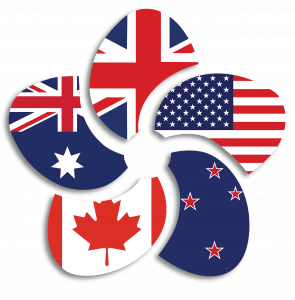
Monumental mistakes have resulted. The 2003 invasion of Iraq by a US led coalition based upon falsified intelligence, ranks as one of the most ill starred. In an act of foreign policy independence, NZ together with Canada (both ‘Five Eyes’ members) declined participation. This demonstrated that intelligence sharing does not necessarily predicate or demand common foreign policy. NZ subsequently reversed this valuable precept however by insisting there is a foreign policy ‘price to be paid’ for membership within the Five Eyes “club” – a U-turn which on the face of it compromises claims to independent foreign policy thinking.
Repercussions of Islam’s devastating internal violence will certainly persist for years ahead. A cascade of anarchic violence involving jihadists, separatists, tribal, sectarian and ethnic violence will not be easily terminated. For outsiders it is impossible to distinguish friend from foe, and terrorism is a tactic utilized by more than one group. Well resourced, media savvy, Islamist extremists are determined to redraw the map of the Middle East with the creation of a new Islamic State (IS) in the form of a caliphate. The last occasion that the regional map was redrawn was 100 years or so ago, by European imperialists, with the devastating consequences that persist today. There is scarcely a regional country now not affected by this struggle for political and religious order, and for the whole concept of statehood in the Arab world. Any idea that by the end of it all, whenever that eventually occurs, major western powers will be able simply to revert to ‘business as usual’ reinvigorating a commanding regional presence, privileging their interests through permanent political oversight, is surely misplaced.
As described earlier NZ sense of international responsibility includes readiness to contribute, within its means, to maintenance of international peace and stability. A small professional defence force constitutes a real NZ national asset because as a product of NZ society itself it possesses professional competence, aptitude for even handedness and a reputation for cooperative staff work alongside foreign contingents. For obvious reasons of size and capacity NZ defence planning rests upon the assumption that NZ forces will only in the most exceptional circumstances (say, the South Pacific), ever be deployed in their own right alone. A genuine question arises however whether the strong preference amongst NZ defence policy planners to confine interoperability solely to performing with high intensity combat forces of major powers especially the US, in fact submerges those NZ aptitudes? Since reestablishment of good standing with the US after 20 odd years of estrangement over NZ non-nuclear policy, NZ has conspicuously prioritised the opportunity to deepen interoperability with American forces and NATO, both in training and active deployments, even while it is not strictly a formal ally. NATO led operations are of course conducted in terms of NATO priorities – not necessarily global needs – and there must remain a persistent and genuine question about how, whether or when these coincide with NZ national interest.
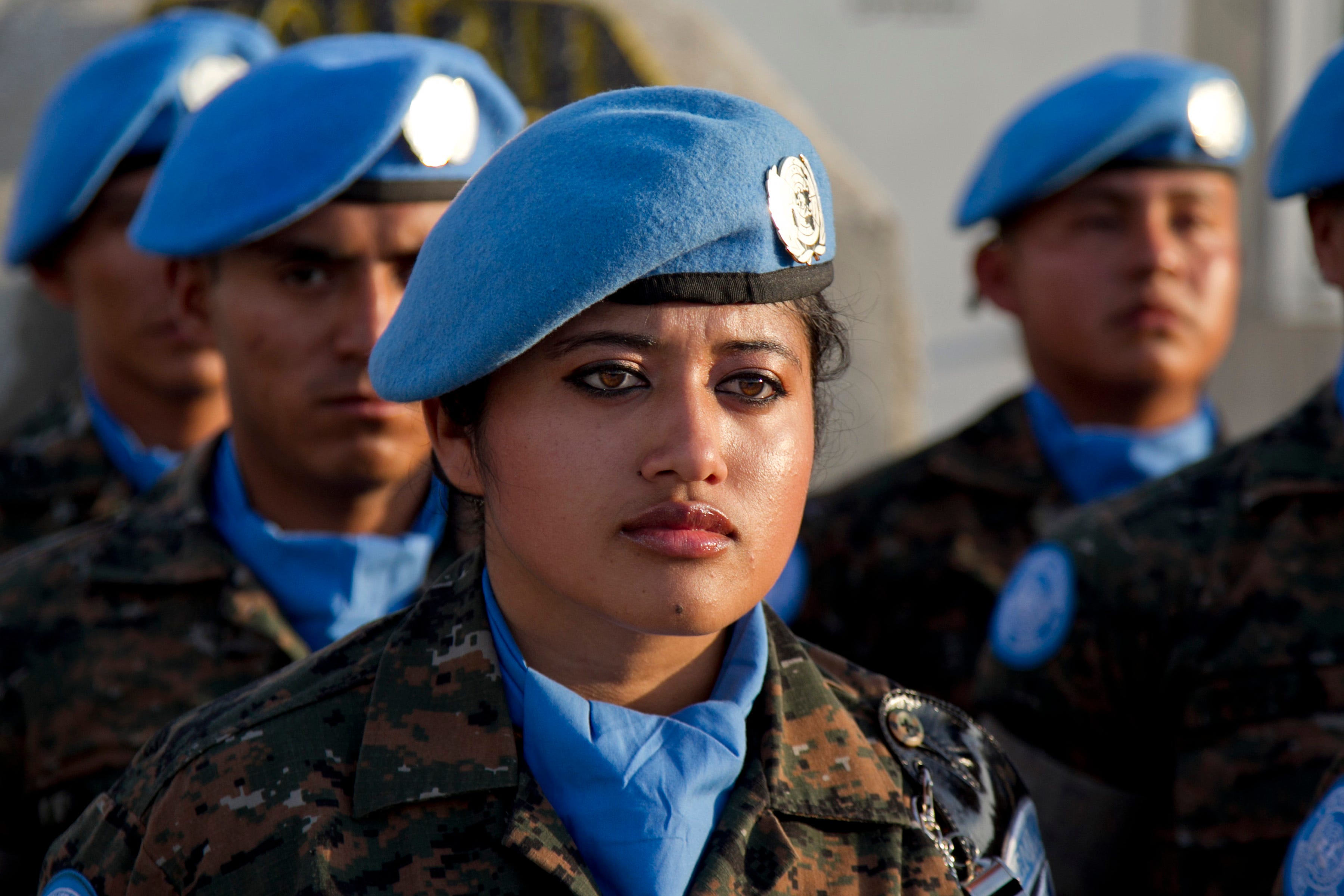
As a consequence there is a marked decline in NZ commitment to UN led peace support missions (UNPKO). One justification is that UNPKO’s reputation has slipped because of unfortunate performance and behaviour in African and other missions. Reform and improvements are at a premium. But NZ needs to recognize that there is a good measure of self fulfilling prophesy behind the deterioration. Major powers, especially the US, disavow UNPKO invovement as a matter of principle (US military will not serve under the UN blue helmet). They have over the years withheld support for improving effectiveness. It is an area where smaller UN members with professional military capability like NZ need to step forward to lend support to UNPKO. This is part of the essential logic behind NZ’s often professed support for rules based international order - which is embodied in and through the UN.
For its part the US prefers to employ ‘coalitions of the willing’ involving NATO, other allies and private security contractors in peace enforcement missions, with or without UN Security Council endorsement. The stark fact in terms of practical results however is that such coalitions have not secured greater success than UN led missions when it actually comes to establishing foundations for durable peace and stability in many places. For the vital long haul task of post conflict reconstruction moreover the UN temperament, capacity and experience actually exceeds that of alliance military contingents. This is not another way however of denying that much effort is needed by member states to improve UN effectiveness.
The importance for NZ of widening and deepening relationships with Asia has been amplified above (ed: see previous posts). Asian governments are committed to UN peacekeeping. China is the largest contributor amongst the permanent UNSC members, and Pakistan, India, Bangladesh are leading overall contributors. Others, Indonesia, Malaysia, Thailand have established records. Successive NZ political leaders call for ‘whole of government’ approach to NZ relationship building with Asia. While NZ military pursues conventional defence diplomacy in East Asia (ship visits, exchange of military attachés etc.), there is little sustained effort by the leadership to seek out inter-operational opportunities with Asian militaries whose governments are committed to UN operations. There is opportunity here to kill two birds with one stone – improve support for the UN and extend cooperative relationships inside Asia. When contrasted with the obvious appetite for increased joint activity with the US and with NATO, it is not clear as things stand just how far NZ defence leadership remains also on board with their politicians’ declared policy for a ‘whole of government’ blueprint for NZ relations in East Asia.
The official explanation for what drives actual NZ choices to operate with foreign military forces, affirms the importance of common values, ideals and democracy when seeking partnerships. On the surface that sounds logical. Actual experience with conflict over a lengthy period however points in a different direction. It reveals that common values and ideals do not explain alliance alignments. In the 20th century, communists fought with capitalists to defeat fascists; dictatorships combined with democracies to confront communists; and as the new century unfolds, human rights advocates join with flagrant human rights abusers to defeat jihadists. This does not mean common values are not important and will indeed remain so, as section 9 affirms. It does however suggest NZ defence chiefs need to be specifically tasked by government with developing closer operational ties with Asian countries.
Practical contributions to peace by NZ extend beyond just military commitments to collective efforts to ensure stability. Diplomacy in support of disarmament and arms control (particularly weapons of mass destruction – nuclear, chemical and biological) remain NZ preoccupations. For NZ, there are two sides to the nuclear weapons coin. First, the further dangerous spread of nuclear weapons ownership must be actively and constructively prevented. Second, the powerful existing weapon owners must, on their side, reduce and ultimately eliminate existing arsenals. Both sides of the coin are enshrined in basic international law (1968 Non Proliferation Treaty). Yet traditional weapon owners remain sturdily reticent about their own obligations, whilst forcibly insistent upon denying further spread of ownership to new hands, even as far as threatening preventive military strike to remove the danger.
Notwithstanding occasional powerful head-of-government platitudes in support of a ‘world free from nuclear weapons’ the traditional owners in effect deny the essential connection between shared obligations and responsibilities for nuclear disarmament. Nuclear weapons modernisation continues; their means of delivery (missiles and stealth aircraft) progressively extended and stubborn diplomatic procrastination persists (neither China nor the US have ratified the UN nuclear test ban treaty). All this is disservice to peaceable global order, just as is the danger of weapons falling into new and uncongenial hands.
As one consequence of the successful attempt at build back of NZ-US relations, official proclamations of NZ foreign policy as noted earlier, omit reference to the existence of NZ’s formal non-nuclear policy in law ( implications of the policy for the US relationship are traversed in Section 6) . The subliminal influence of that supreme act of NZ foreign policy independence endures nonetheless. With other like minded governments NZ continues to press for equitably applied nuclear disarmament and has taken a lead in proposing actual steps to be taken in international law to formally provide the legal framework. NZ has put its weight too behind an approach that emphasises the catastrophic humanitarian consequences for human survival of the use or the testing of nuclear weapons, both for the environment and for the health of future generations. This is not an altogether new idea, but a much greater fact base has now been assembled to justify this particular dimension of nuclear disarmament , in an age when humanitarian concerns bulk large in the rhetoric of major powers. NZ has developed as well a track record of activism in support also of conventional weapons disarmament – small arms, land mines and uranium depleted munitions.
The abiding lesson of modern international relations is that in an era of globalization, it is virtually impossible to restrict the flow of technology to ‘the haves’ alone. The ‘have nots’ or the ‘have laters’ exert constant pressure to acquire their share. The 21st century will be consumed by new arms control issues like the use of drones, the employment of robots, cyber security and the continuation of concern with militarisation of space. NZ must expect to be implicated in international efforts to constrain additional threats to peace from these new directions. Drone technology, for example, is evolving faster than our collective ability to understand, legally and ethically, how to employ them [1]. As of this writing over 70 countries are now developing the technology and non-state actors will obviously also be in on the act. De-weaponising drones or robots is a disarmament avenue largely unexplored.
[1] Croker C. Can War Be Eliminated? Polity. 2014. pp.6-7
(note: this section was actually section 4 not 5 in the original work)
Supporting Research - NZ UN Peace Keeping Sharply Down
Overall pattern:
• Personnel: sharply down from 1990s–2000s high-intensity missions.
• Funding: steady, not growing significantly in real terms.
• NZ now favours specialists, observers, staff officers, rather than battalion-sized deployments.

The point about UN peacekeeping being undervalued is spot on. Smaller nations with profesional militaries could actually strengthen multilateral institutions while building Asian partnerships. It seems like the NATO interoperability focus might be missing the bigger strategic picture, especialy given where future challneges will emerge.